Category: Uncategorized

  • EduFi & Airlink Communications – BNPL Partnership

    EduFi & Airlink Communications – BNPL Partnership

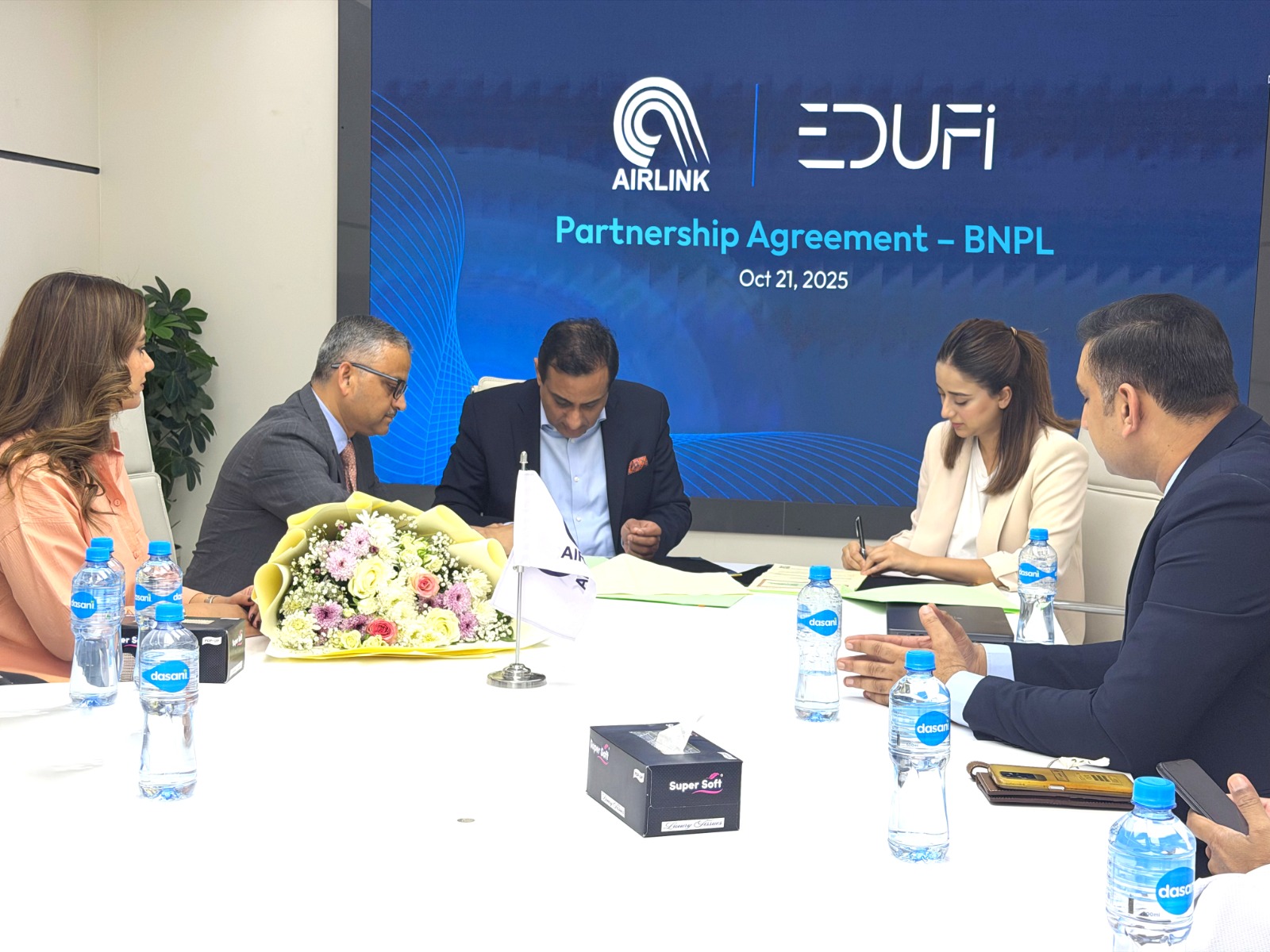
    In a significant step toward expanding consumer financing solutions in Pakistan, EduFi has partnered with Airlink Communications to enable Buy Now Pay Later (BNPL) services across its Samsung product range.

    This collaboration aims to make high-quality products more accessible to customers by offering structured and affordable installment plans. By integrating financing directly at the point of sale, customers can now purchase essential appliances and devices without the burden of upfront payments.

    This initiative reflects the growing demand for embedded finance solutions in Pakistan, where affordability and access remain key challenges for middle-income consumers.

    Through this partnership, EduFi continues to strengthen its mission of enabling financial inclusion by providing flexible payment options and improving purchasing power.

    Smartphone Demand in Pakistan: A Structural Shift

    Pakistan is witnessing rapid growth in smartphone adoption, driven by increasing digital connectivity, rising internet penetration, and the need for affordable access to technology. Several macro trends are reinforcing this shift:

    • Rising demand for smartphones due to digital banking, online education, and e-commerce adoption
    • Increasing reliance on mobile devices for daily communication, work, and financial transactions
    • Growing youth population driving demand for upgraded and feature-rich devices
    • Expansion of 4G/5G infrastructure improving accessibility and usability of smartphones

    While inflation and currency depreciation have made smartphones more expensive, they have also increased the need for flexible purchasing options. In this context, smartphones are no longer a luxury but a necessity for participation in the digital economy.

    Enabling Access through Embedded Finance

    The core innovation behind this partnership is the integration of financing solutions directly into the smartphone purchasing journey. Through EduFi’s BNPL model, customers can access flexible installment plans tailored to their affordability and usage needs.

    For Airlink Communications, this collaboration enables greater market reach by making smartphones accessible to customers who may not have the ability to pay upfront, unlocking previously untapped demand.

    By bridging this affordability gap, the collaboration is expected to:

    • Increase smartphone penetration across middle-income and youth segments
    • Improve retail conversion rates through installment-based purchasing
    • Enable access to higher-quality and feature-rich devices
    • Enhance customer experience through seamless and flexible payment options

    Driving Growth through Fintech Integration

    This collaboration highlights the growing convergence of fintech and telecom distribution sectors in Pakistan. By embedding financing into the point-of-sale process, businesses can significantly improve accessibility while driving higher sales volumes.

    EduFi continues to expand its footprint beyond education financing into consumer technology, enabling individuals to access essential digital tools through structured and affordable payment solutions.

    A Step Forward for Pakistan’s Digital Economy

    This partnership represents a key milestone in improving access to smartphones across Pakistan. As digital adoption accelerates, BNPL solutions will play a crucial role in ensuring that affordability does not become a barrier to connectivity.

    With strong alignment between technology distribution and financial infrastructure, this collaboration sets the stage for a more inclusive and digitally empowered consumer ecosystem in Pakistan.

  • EduFi & Sapphire Home Appliances – BNPL Partnership

    EduFi & Sapphire Home Appliances – BNPL Partnership

    In a significant step toward expanding consumer financing solutions in Pakistan, EduFi has partnered with Sapphire Home Appliances to enable Buy Now Pay Later (BNPL) services across its product range.

    This collaboration aims to make high-quality products more accessible to customers by offering structured and affordable installment plans. By integrating financing directly at the point of sale, customers can now purchase essential appliances and devices without the burden of upfront payments.

    This initiative reflects the growing demand for embedded finance solutions in Pakistan, where affordability and access remain key challenges for middle-income consumers.

    Through this partnership, EduFi continues to strengthen its mission of enabling financial inclusion by providing flexible payment options and improving purchasing power.

    Consumer Appliance Demand in Pakistan: A Structural Shift

    Pakistan is increasingly emerging as a high-growth market for consumer appliances, driven by evolving lifestyles, urbanization, and rising demand for convenience. Several macro trends are reinforcing this shift:

    • Rising cost of living has made upfront purchases of appliances more difficult, increasing reliance on installment-based buying
    • Growing urban middle class is driving demand for modern home appliances such as refrigerators, washing machines, and air conditioners
    • Increased awareness of energy-efficient appliances is influencing purchasing decisions
    • Expansion of retail networks and e-commerce platforms has improved accessibility to a wider range of products

    While inflation and currency depreciation have impacted purchasing power, they have also accelerated the demand for flexible payment solutions. In this context, consumer appliances are no longer considered luxury items but essential household needs.

    Enabling Access through Embedded Finance

    The core innovation behind this partnership is the integration of financing solutions directly into the appliance purchasing journey. Through EduFi’s BNPL model, customers can access flexible installment plans tailored to their affordability and needs.

    For retail partners like Sapphire Home Appliances, this collaboration enhances their ability to serve customers who may not have immediate liquidity, unlocking demand that was previously constrained.

    By bridging this affordability gap, the collaboration is expected to:

    • Increase sales conversion rates across retail outlets
    • Enable customers to purchase essential appliances without upfront financial burden
    • Expand access to quality home appliances for middle-income segments
    • Strengthen customer satisfaction through flexible payment options

    Driving Growth through Fintech Integration

    This collaboration reflects the growing convergence of fintech and retail sectors in Pakistan. By embedding financing within the sales process, businesses can enhance customer experience while improving operational efficiency.

    EduFi’s leadership continues to play a key role in expanding financial accessibility beyond education into broader consumer markets, enabling smarter and more inclusive purchasing solutions.

    A Step Forward for Pakistan’s Consumer Economy

    This partnership represents more than a commercial agreement—it highlights a shift in how consumer goods are purchased and financed in Pakistan. As affordability challenges persist, BNPL solutions are expected to play a critical role in sustaining consumer demand and supporting retail growth.

    With strong alignment between retail and financial infrastructure, this collaboration sets the foundation for scalable and inclusive access to essential home appliances across the country.

  • Hadron Solar and QistiFi Sign Landmark MOU to Accelerate Solar Financing in Pakistan

    Hadron Solar and QistiFi Sign Landmark MOU to Accelerate Solar Financing in Pakistan

    In a significant step toward advancing Pakistan’s renewable energy and fintech convergence, Hadron Solar and Qistifi have signed a Memorandum of Understanding (MOU) aimed at enabling more accessible, structured, and scalable solar financing solutions across the country.

    The signing ceremony, held with key stakeholders from both organisations, was spearheaded by Ahmed Tariq and Waqas Moona, marking a pivotal collaboration between energy innovation and embedded financial infrastructure. The initiative also reflects the growing role of EduFi leadership talent in shaping adjacent sectors beyond education finance, particularly in climate and energy transition solutions.

    A Strategic Partnership at a Critical Moment

    This partnership arrives at a time when Pakistan’s energy landscape is undergoing rapid transformation. Rising electricity tariffs, persistent grid instability, and increasing demand for energy independence have accelerated the shift toward distributed solar solutions, particularly in residential, agricultural, and small business segments.

    Solar adoption in Pakistan has surged over the past few years, driven by a combination of falling panel prices, net metering incentives, and consumer pressure to reduce reliance on expensive grid electricity and diesel generators. However, despite strong demand, financing remains one of the largest barriers to widespread adoption—especially for middle-income households and SMEs that lack upfront capital.

    The Hadron Solar–Qistifi partnership directly addresses this gap by embedding financing at the point of sale, enabling customers to transition to solar energy through structured, affordable repayment plans rather than large upfront investments.

    Solar Momentum in Pakistan: A Structural Shift

    Pakistan is now widely viewed as one of the fastest-growing distributed solar markets in the region. Several macro trends are reinforcing this shift:

    • Rising grid electricity costs have made solar payback periods increasingly attractive, often under 2–3 years for residential users.
    • Net metering expansion, despite regulatory fluctuations, has empowered consumers to monetize excess energy.
    • Currency depreciation and fuel import volatility have made imported fossil fuel-based generation increasingly expensive and unpredictable.
    • Energy security concerns, especially during periods of regional instability and supply chain disruptions, have pushed both households and businesses toward self-generation models.

    While global geopolitical tensions and supply chain disruptions have contributed to energy price volatility—including disruptions in oil and LNG markets—Pakistan’s structural dependence on imported fuels has made renewables not just an environmental choice, but an economic necessity.

    In this context, solar is no longer a niche alternative; it is rapidly becoming a mainstream energy strategy.

    Enabling Access Through Embedded Finance

    The core innovation behind the MOU is the integration of financing infrastructure into solar deployment workflows. Through Qistifi, customers will be able to access flexible payment plans tailored to their consumption patterns and repayment capacity.

    For Hadron Solar, this partnership enhances its ability to scale installations beyond cash-constrained segments, unlocking demand that has historically been underserved due to financing limitations.

    By bridging this gap, the collaboration is expected to:

    • Increase solar adoption among residential and SME segments
    • Reduce upfront cost barriers for clean energy transition
    • Improve installer conversion rates through embedded financing
    • Expand access to energy independence in underserved markets

    Leadership Driving Cross-Sector Innovation

    The collaboration also highlights the increasing cross-pollination between fintech and energy sectors in Pakistan. Leadership from EduFi, particularly through Ahmed Tariq, reflects a broader trend of fintech expertise being applied to real-economy challenges such as energy access and affordability.

    Meanwhile, Waqas Moona emphasized the importance of scalable infrastructure that not only delivers solar systems but also ensures customers can sustainably afford them over time.

    A Landmark Step for Pakistan’s Energy Transition

    This MOU represents more than a commercial partnership—it signals a structural shift in how solar energy is financed, distributed, and adopted in Pakistan. As the country continues to navigate energy insecurity and rising demand, partnerships like this are expected to play a central role in accelerating the transition toward decentralized, renewable energy systems.

    With strong alignment between technology, finance, and energy deployment, the Hadron Solar–Qistifi collaboration sets a precedent for future integrated solutions in Pakistan’s rapidly evolving energy ecosystem.